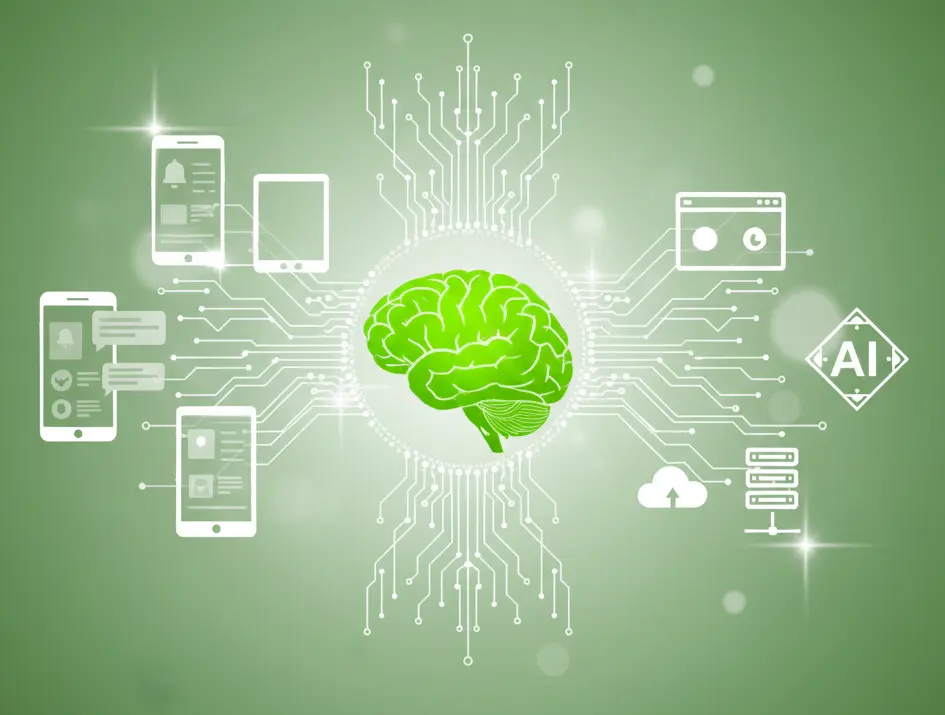
How AI Assistants Are Transforming Modern Mobile & Web Apps in 2025
Written by: Elyxtech
Edited by: Elyxtech Editorial Team
November 25, 2025
Artificial intelligence has moved far beyond simple chatbots. In 2025, AI assistants have become a core feature of high-performing mobile and web applications. From automating user tasks to delivering hyper-personalized experiences, AI is redefining how businesses design, build, and scale digital products. For startups and small businesses, understanding how AI assistants work—and how to integrate them—has become essential for staying competitive. In this in-depth guide, we explore how AI assistants are transforming modern apps, the latest trends shaping the industry, and how companies like Elyxtech help founders implement AI-driven solutions.
What Are AI Assistants in 2025?
AI assistants in 2025 are no longer simple bots that answer predefined questions. They leverage large language models (LLMs), predictive analytics, and contextual awareness to perform complex tasks, automate workflows, and provide personalized insights. Modern AI assistants understand user intent, adapt based on behavior, and integrate deeply with app architecture. Startups now use AI assistants to automate onboarding, support, recommendations, and internal business operations. As a result, AI is becoming a foundational component of mobile and web apps designed for global audiences.
- Why Today’s AI Assistants Are Far More Advanced
The shift from simple chatbots to autonomous AI is driven by breakthroughs in NLP, vector databases, on-device inference, and advanced machine learning models. Modern AI assistants can summarize information, execute tasks, provide recommendations, generate content, and even act as copilots inside apps. These capabilities significantly enhance user experience, reduce friction, and boost app adoption.
How AI Assistants Enhance Mobile & Web Apps
AI assistants enhance mobile and web applications by providing highly personalized, efficient, and automated interactions. They streamline onboarding, offer instant support, analyze user behavior, automate repetitive processes, and help businesses deliver better user experiences. In 2025, users expect apps to understand their intent and respond intelligently—making AI integration a competitive necessity rather than an optional feature.
- 1. Hyper-Personalized User Experiences
AI assistants analyze user behavior in real time, tailoring content, recommendations, and app interactions. Instead of generic interfaces, apps adjust dynamically based on user intent. For example, an eCommerce app may automatically suggest items based on browsing patterns or a fitness app might create custom workout plans by interpreting past activity and goals.
- 2. Intelligent Task Automation
AI assistants automate complex workflows such as scheduling, form filling, data organization, and customer support. This reduces user effort and significantly improves the usability of apps. Businesses benefit from fewer support tickets, faster user onboarding, and more efficient operations.
- 3. Natural Voice & Chat Interactions
Voice-enabled and conversational interfaces are becoming a standard feature. Modern AI assistants understand tone, sentiment, and context, allowing users to interact with apps more naturally. This makes apps accessible to users who prefer voice interactions or hands-free navigation.
Latest AI Assistant Trends in 2025
The year 2025 introduces several new trends shaping AI-powered apps: multimodal AI, on-device inference, autonomous copilots, domain-trained LLMs, and seamless API-driven automation. Startups are rapidly adopting these technologies to improve product performance and reduce operational costs. These innovations allow apps to analyze images, voice, gestures, and data simultaneously, producing more accurate results.
- 1. Multimodal AI Experiences
Users can now upload images, speak commands, draw shapes, or type text—and the AI assistant understands across modalities. This trend is powering apps in healthcare, finance, education, and retail.
- 2. On-Device AI Models
With the rise of edge computing, AI assistants run directly on mobile devices rather than the cloud. This reduces latency, improves privacy, and enables offline capabilities.
- 3. Industry-Specific AI Copilots
Startups now request AI copilots tailored to industries like logistics, property management, finance, and healthcare. These copilots automate tasks, analyze patterns, and offer real-time recommendations.
Benefits of Integrating AI Assistants into Your App
AI assistants offer transformative benefits for both startups and established businesses. They reduce operational workload, increase product adoption, improve user engagement, and create scalable automation. Companies that integrate AI assistants into their apps experience higher retention and a more streamlined user journey. In 2025, AI capability has become a direct driver of app success.
- 1. Increased User Retention
Apps with AI assistants provide quicker solutions and smoother interactions, leading to improved retention rates. Personalized suggestions and automated support keep users actively engaged.
- 2. Reduced Support and Operational Costs
AI assistants reduce the need for large support teams by automating repetitive questions, troubleshooting, and account-related tasks. This makes them ideal for startups aiming to scale efficiently.
- 3. Faster Time to Market
AI-powered development tools accelerate product design, content generation, testing, and deployment. Startups gain agility, speeding up product cycles from MVP to full-scale launch.
How Startups Can Implement AI Assistants in 2025
Startups can integrate AI assistants by identifying high-impact use cases, choosing the right AI model, designing conversational workflows, and ensuring data infrastructure is secure and scalable. Tools such as vector databases, cloud AI platforms, and custom-trained LLMs make it possible to build powerful assistants even on smaller budgets.
- 1. Identify the Most Valuable Use Cases
Choose features where AI can create significant impact—customer support, user onboarding, search optimization, content generation, workflow automation, or personalization.
- 2. Select the Right AI Technology Stack
Depending on your app needs, you may use OpenAI APIs, fine-tuned LLMs, TensorFlow, edge AI, or hybrid cloud systems. Elyxtech helps startups pick the right tools with scalability in mind.
- 3. Build Conversational and Task-Oriented Flows
Effective AI assistants combine natural conversation with actionable workflows—allowing users to complete tasks, access information, and receive recommendations instantly.
- 4. Ensure Data Privacy & Security
Use encrypted storage, anonymized training data, on-device AI processing, and secure API gateways. AI must comply with privacy standards like GDPR and global data regulations.
#AI Assistants#Smart Automation#AI Apps 2025#App Intelligence#Future of AI
Did you find this article useful? Sharing it with your network can help others discover the valuable insights you’ve learned! Whether it's through Facebook, Twitter, or LinkedIn, sharing this content is a great way to contribute to a larger conversation. Let’s empower others together!