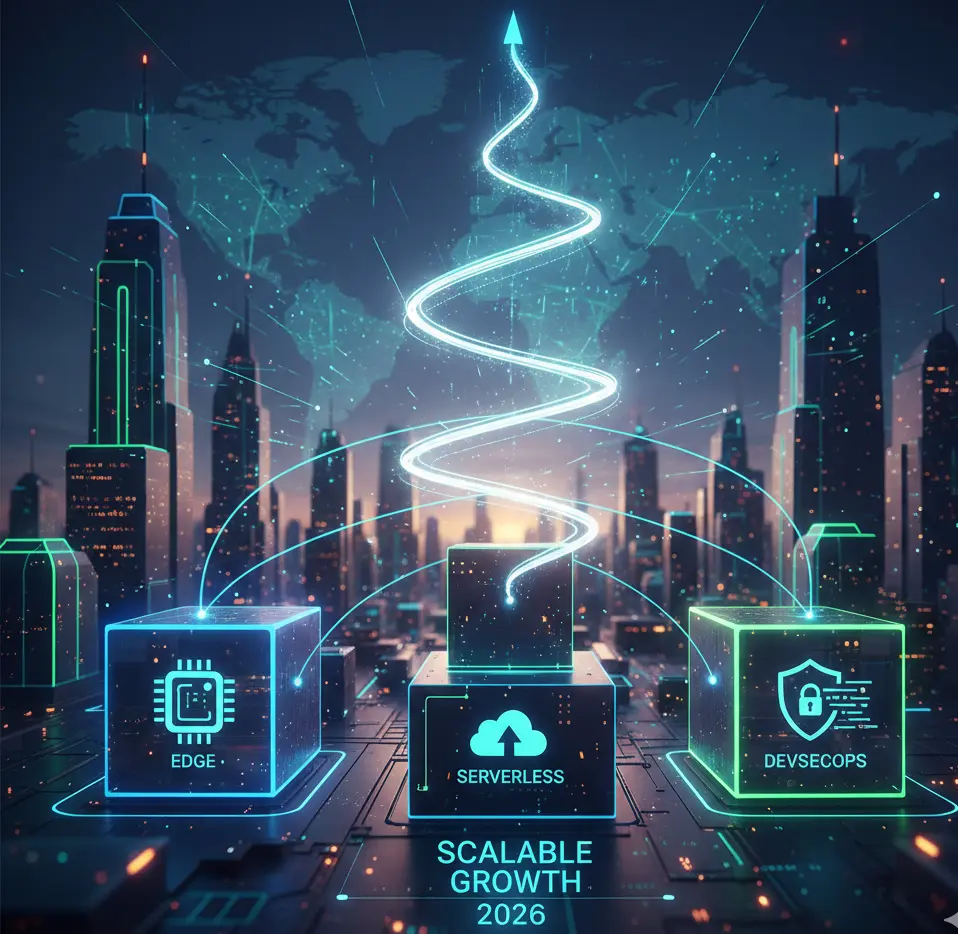
Future of App Architecture in 2026: Edge, Serverless & DevSecOps for Scalable Growth
Written by: Elyxtech
Edited by: Elyxtech Editorial Team
March 10, 2026
The architecture of modern applications is undergoing a profound transformation. In 2026, Edge computing, Serverless platforms, and DevSecOps practices are becoming the foundation of scalable, secure, and high-performance digital products. Together, these technologies allow startups and enterprises to deliver faster user experiences, reduce infrastructure complexity, and achieve resilient growth. This in-depth guide explores how this new architecture paradigm is shaping the future of software development.
The Evolution of Application Architecture
Why traditional architectures are no longer sufficient.
- From Monoliths to Cloud-Native
Legacy monolithic architectures cannot meet the speed, scale, and resilience demands of modern digital products. In 2026, organizations are embracing microservices, cloud-native systems, and distributed architectures that support continuous deployment and rapid innovation. Footer: Evolution is mandatory for competitiveness.
Edge Computing: Power at the Source
How edge computing is redefining performance.
- Real-Time Processing with Edge
Edge computing processes data closer to users, reducing latency, improving reliability, and enabling real-time decision-making for IoT, mobile apps, and immersive experiences. Footer: Edge computing redefines performance expectations.
Serverless: The New Cloud Standard
Why serverless is becoming the default model.
- Elastic Scalability via Serverless
Serverless platforms eliminate infrastructure management, allowing developers to focus purely on business logic. Automatic scaling, pay-per-use pricing, and global deployment make serverless the ideal foundation for high-growth applications. Footer: Serverless is the new default.
DevSecOps: Security at Every Stage
Embedding security into the development lifecycle.
- Security as Code
DevSecOps integrates security throughout the development lifecycle using automation, continuous monitoring, and policy enforcement. This approach reduces vulnerabilities, improves compliance, and builds customer trust. Footer: Security drives business confidence.
Building Scalable Growth Systems
How these technologies work together.
- The Architecture of Growth
When combined, Edge, Serverless, and DevSecOps create a powerful ecosystem that supports rapid scaling, global reach, and resilient performance. This architecture model enables startups and enterprises to adapt quickly and grow sustainably. Footer: Integrated systems fuel growth.
Preparing for the Future
Best practices for adoption and execution.
- Roadmap for Adoption
Organizations should invest in cloud-native skills, automation, observability, security culture, and continuous improvement to stay competitive. The future belongs to teams that build with scalability, performance, and security at the core. Footer: Preparation ensures leadership.
#App Architecture#Edge Computing#Serverless#Cloud Development#Tech Trends 2026
Did you find this article useful? Sharing it with your network can help others discover the valuable insights you’ve learned! Whether it's through Facebook, Twitter, or LinkedIn, sharing this content is a great way to contribute to a larger conversation. Let’s empower others together!